You finally cleared your breakout , but now you’re left staring at a reminder of it every morning in the mirror. Acne scars, dark spots, and post-inflammatory marks can feel just as frustrating as the pimples themselves. The good news? You don’t need to reach for harsh chemical peels or prescription creams to see results.
In this guide, we’ll walk you through how to remove acne scars naturally using time-tested herbal remedies, non toxic skincare practices, and chemical free skincare products that nourish your skin without disrupting your health or hormones.
Acne Scars: What You’re Actually Dealing With
Before diving into remedies, it helps to know which type of acne scar you have — because not all scars are the same.
Post-Inflammatory Hyperpigmentation (PIH)
These are the flat, dark or reddish spots left behind after a pimple heals. Technically not “scars” in the structural sense, PIH is the most common concern and the most responsive to natural treatment. They’re especially common in people with deeper skin tones.
Atrophic Scars
These are depressions or indentations left in the skin: icepick scars (deep, narrow), boxcar scars (wide, box-shaped), and rolling scars (wavy texture). They result from collagen loss during healing.
Hypertrophic / Keloid Scars
Raised scars that occur when the body overproduces collagen. More common on the back, chest, and jawline.
Natural remedies work best on PIH and mild atrophic scars. Deep pitted scars may need professional support, but natural skincare can still significantly improve their appearance over time.
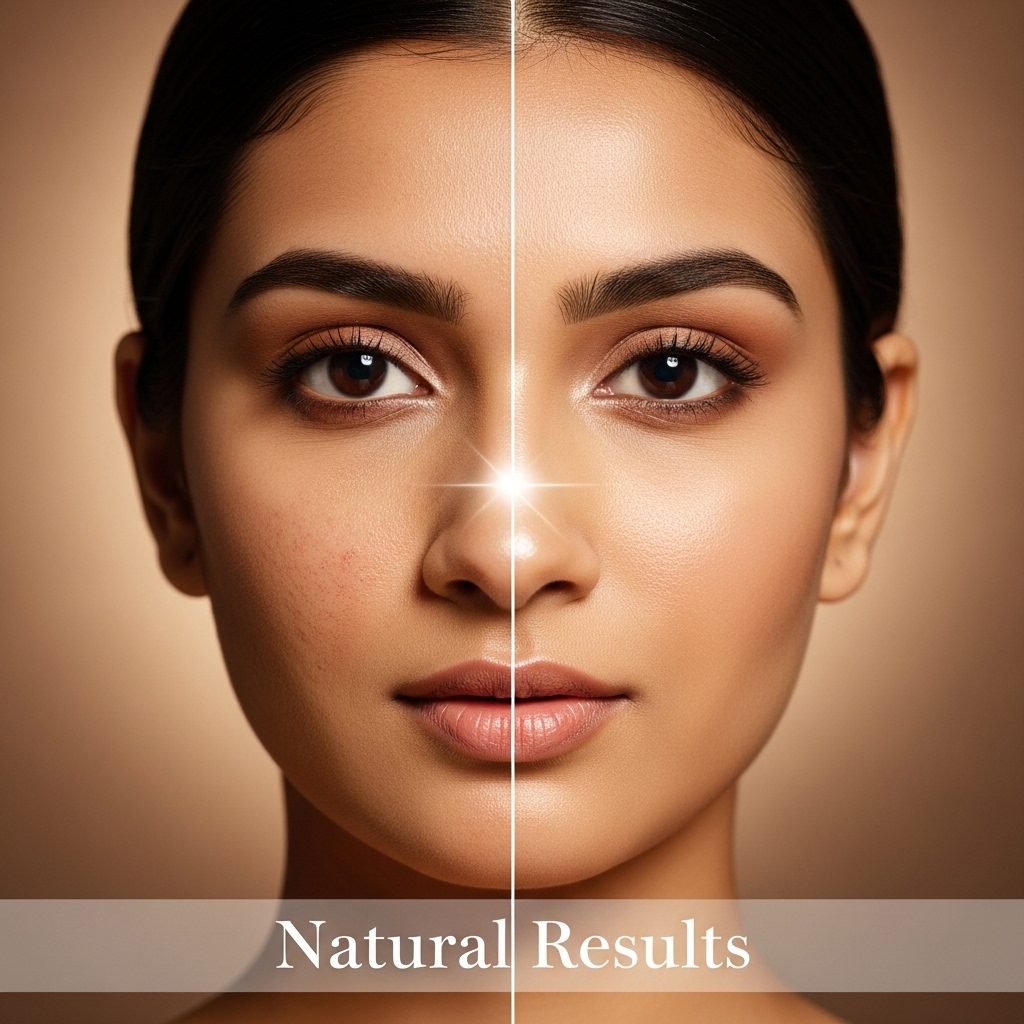
Why Choose Natural and Non Toxic Skincare for Acne Scars?
Many conventional acne scar treatments from retinoids to hydroquinone to chemical peels — can be effective but come with side effects like irritation, sun sensitivity, and in some cases long-term concerns. For people with sensitive skin, reactive skin, or those who simply want to avoid unnecessary chemicals, non toxic skincare offers a safer, gentler path.
Chemical free skincare products work with your skin’s own biology rather than overriding it. Plant-derived actives like vitamin C, niacinamide from botanical sources, and adaptogenic herbs can:
- Inhibit excess melanin production (fading dark spots)
- Stimulate collagen synthesis naturally
- Reduce inflammation that leads to scar formation
- Strengthen the skin barrier to prevent future scarring
- Balance skin microbiome without harsh disruption
And because they’re gentler, you can often use them more consistently, which is key for results.
Top Natural Ingredients That Fade Acne Scars
1. Aloe Vera — Nature’s Scar Healer
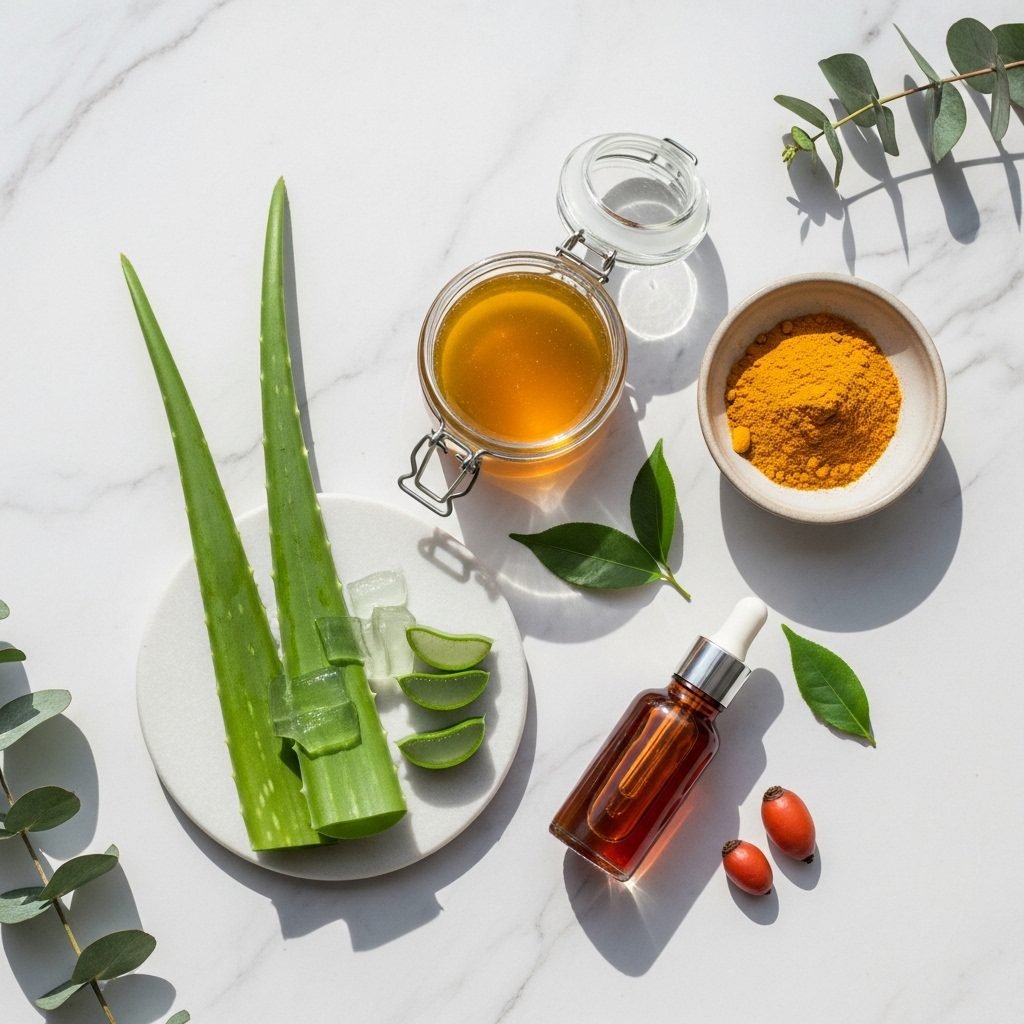
Aloe vera is one of the most well-researched natural wound-healing agents. It contains aloesin, a compound shown to inhibit tyrosinase — the enzyme responsible for melanin production — making it effective for both fading dark spots and supporting collagen remodeling.
How to use: Apply pure, cold-processed aloe vera gel directly to scarred areas twice daily. Look for non toxic skincare brands that use organic aloe as the base ingredient rather than water.
2. Rosehip Seed Oil — The Anti-Scar Oil
Rich in trans-retinoic acid (a natural form of vitamin A), vitamin C, and essential fatty acids, rosehip oil is a powerhouse for acne scar treatment. Multiple studies have shown it significantly improves skin texture, tone, and scar appearance with consistent use.
How to use: Apply 3–5 drops of cold-pressed rosehip oil to clean skin each evening. It’s non-comedogenic and safe for acne-prone skin.
3. Vitamin C from Botanical Sources
Vitamin C (ascorbic acid) is one of the most studied ingredients for hyperpigmentation. It brightens dark spots, inhibits excess melanin, and boosts collagen production. When sourced from ingredients like kakadu plum, camu camu, or amla, it’s a naturally derived alternative to synthetic ascorbic acid derivatives.
How to use: Use a serum with at least 10–15% vitamin C concentration in the morning, followed by SPF.
4. Turmeric — Ancient Brightening Herb
Curcumin, the active compound in turmeric, is a potent anti-inflammatory and melanin inhibitor. It’s been used in Ayurvedic skincare for centuries to fade scars, brighten the complexion, and prevent post-acne marks from deepening.
DIY mask: Mix 1 tsp turmeric with raw honey and a few drops of rosehip oil. Apply for 15 minutes, 2–3 times per week.
5. Raw Honey — Antibacterial and Regenerative
Manuka honey and raw honey both contain hydrogen peroxide, propolis, and methylglyoxal — compounds that fight bacteria, reduce inflammation, and support wound healing. Raw honey is deeply moisturizing, which keeps scarred tissue pliable and helps it heal more evenly.
6. Green Tea Extract
Epigallocatechin gallate (EGCG) in green tea is a powerful antioxidant that reduces inflammation and sebum production. It also supports more even collagen distribution during healing, making it useful for preventing and fading acne scars.
7. Bakuchiol — The Plant-Based Retinol Alternative
Derived from the babchi plant, bakuchiol provides retinol-like benefits (stimulates collagen, speeds cell turnover, fades dark spots) without the irritation, dryness, or sun sensitivity of conventional retinol. It’s one of the best chemical free skincare ingredients for acne scars, particularly for sensitive skin.
8. Niacinamide (Vitamin B3)
Niacinamide is a skin-brightening, barrier-strengthening ingredient found naturally in many plants. It inhibits melanin transfer to skin cells, visibly reducing hyperpigmentation within 4–8 weeks of consistent use. Look for it in non toxic skincare formulas at 4–10% concentration.
Natural DIY Recipes for Acne Scar Treatment
Brightening Aloe & Vitamin C Serum
Mix: 2 tbsp fresh aloe vera gel + 1 tsp rosehip oil + 1 tsp amla powder (for natural vitamin C) + 3 drops lavender essential oil. Store in a dark glass bottle in the refrigerator. Apply nightly to scarred areas.
Turmeric & Honey Clarifying Mask
Mix: 1 tsp organic turmeric + 2 tsp raw honey + ½ tsp plain yogurt (contains lactic acid for gentle exfoliation). Apply for 15–20 minutes, rinse with warm water. Use 2–3 times per week.
Green Tea Toning Mist
Brew a strong cup of organic green tea, allow to cool completely, add 5 drops of tea tree oil and 5 drops of lavender oil, pour into a spray bottle. Mist onto clean skin as a toner morning and night.
Building a Natural Skincare Routine for Acne Scars
Morning Routine
- Cleanse with a gentle, non toxic cleanser (look for aloe or chamomile-based formulas)
- Apply a vitamin C serum from botanical sources
- Follow with a lightweight, non-comedogenic moisturizer
- Finish with broad-spectrum SPF 30+ (UV exposure darkens acne scars significantly — sun protection is non-negotiable)
Evening Routine
- Double cleanse if wearing SPF or makeup
- Apply bakuchiol or rosehip oil serum
- Use niacinamide serum on hyperpigmented areas
- Lock in with a nourishing, plant-based night moisturizer
- Use a face mask 2–3 times per week
Weekly
- Gentle physical or enzymatic exfoliation (papaya enzyme mask, rice bran scrub) to accelerate cell turnover
- Gua sha or facial massage to boost circulation and lymphatic drainage — this can speed scar healing
Lifestyle Habits That Speed Up Natural Scar Healing
Your skincare routine is only part of the equation. These lifestyle factors have a direct impact on how quickly your skin heals:
Sun Protection: UV rays are the #1 reason dark spots and scars become more visible and take longer to heal. Wear SPF daily — even in winter. Choose a mineral-based, chemical free SPF with zinc oxide.
Nutrition: Vitamin C-rich foods (bell peppers, citrus, kiwi), zinc (pumpkin seeds, lentils), and omega-3 fatty acids (flaxseed, walnuts) all support collagen production and skin repair from the inside out.
Hydration: Drinking enough water maintains skin elasticity and helps detox pathways that affect skin health.
Sleep: Skin cell regeneration peaks during deep sleep. Getting 7–9 hours is one of the most underrated herbal acne treatments.
Stress Management: Chronic stress elevates cortisol, which drives sebum production and inflammation — both of which worsen acne and slow scar healing.
Hands Off: Picking, popping, or touching breakouts is the #1 cause of worsened scarring. Let natural topicals do the work.
How to Choose the Best Chemical Free Skincare Products for Acne Scars
With the clean beauty market growing rapidly, it’s important to read labels carefully. Here’s what to look for — and what to avoid:
Look for:
- Short, recognizable ingredient lists
- Certified organic or wildcrafted botanical extracts
- Preserved with natural alternatives like rosemary extract, vitamin E, or fermented ingredients
- Non-comedogenic rating — especially important for acne-prone skin
- Fragrance-free or scented only with pure essential oils
- Brands with transparent sourcing and third-party testing
Avoid:
- Synthetic fragrances (listed as ‘fragrance’ or ‘parfum’)
- Parabens, phthalates, and PEGs
- Formaldehyde-releasing preservatives
- Artificial dyes and colorants
- Alcohol denat (drying and irritating for scarred skin)
Learning how to remove acne scars naturally is a journey — not a quick fix. But with the right plant-based ingredients, chemical free skincare products, and supportive lifestyle habits, you can significantly fade dark spots, improve skin texture, and restore your confidence without exposing your skin to unnecessary chemicals.
Your skin is your body’s largest organ. It deserves ingredients you can trust.
At eHerbal Skincare, every product we formulate is rooted in the power of plants — crafted with non toxic skincare principles to support your skin’s natural healing intelligence. Explore our collection of herbal acne treatments, brightening serums, and chemical free skincare products designed specifically for acne-prone, scarred, and sensitive skin.