
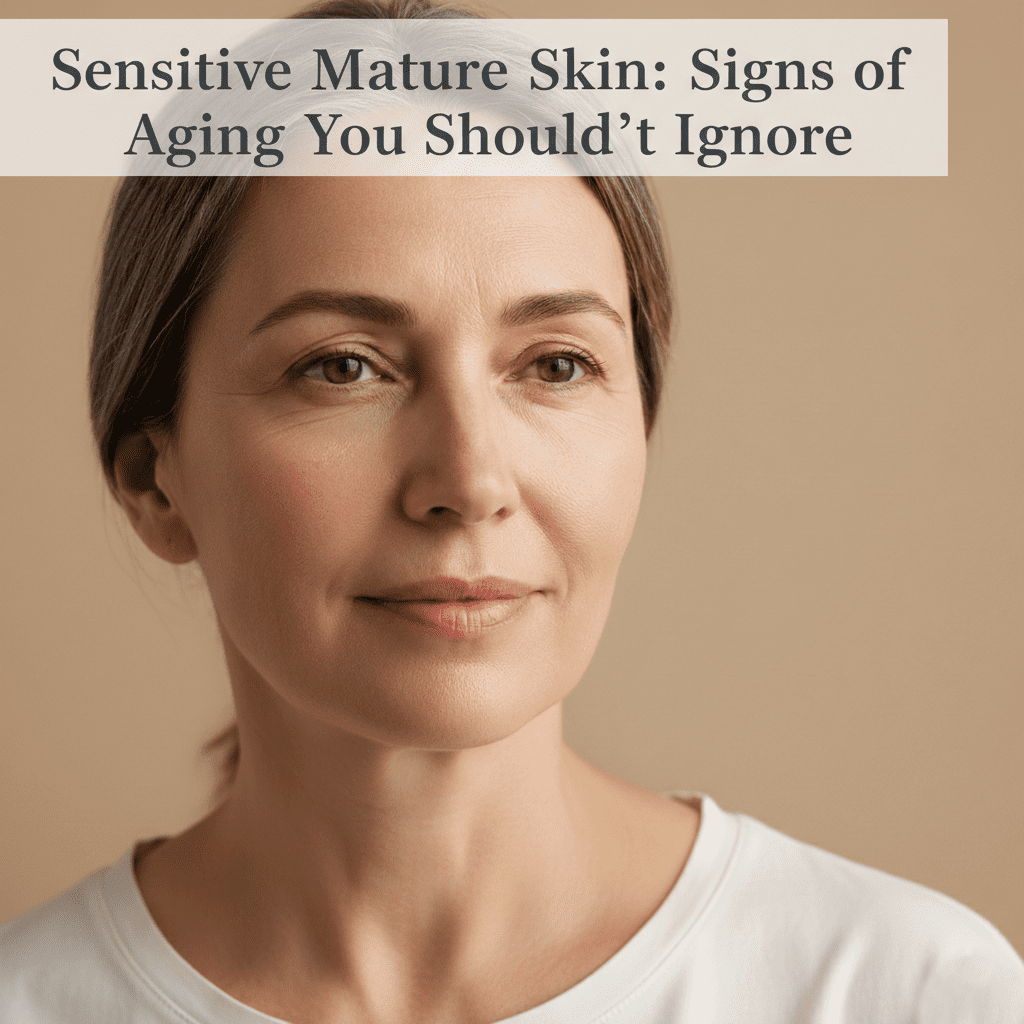
Once the skin aging process begins, the skin’s structure starts to change. These changes have visible external repercussions on its structure and appearance.
Indeed, due to a depletion of the natural elements that give skin its firm and youthful appearance, wrinkles and fine lines can appear. The internal structure continues to weaken, which can also lead to a loss of skin volume or density. Furthermore, mature skin can become more sensitive and require specific care—particularly day and night creams for the face—to strengthen its skin barrier and provide adequate hydration.
In this article, I’ll help you understand the needs of sensitive mature skin and adopt the right Chemical free skincare routine.
What is Sensitive Mature Skin?
Skin is generally considered mature around the age of forty. However, it begins to age much earlier, as the first signs of aging appear on the face as early as 25. The most visible signs are:
-fine lines and wrinkles
-loss of volume
-loss of density
And because of this aging process, the skin becomes drier, more reactive to external aggressors, and therefore, more sensitive. All skin types can be affected by this sensitivity, since the skin aging process is natural and inevitable.
How to Recognize Sensitive Mature Skin?
Several signs can indicate that mature skin is sensitive, including sensations of itching, tightness, and redness, which affect the comfort of the facial skin. This is especially true since skin aging affects all the layers of the skin.
The Layers of the Epidermis
Due to the slowing of cell renewal and the reduction in lipid production on the skin’s surface, it is likely to be dry and rough. As we age, the epidermis becomes more sensitive to UV rays. Its healing capacity is reduced, and a weakened immune function can lead to:
- An increase in skin infections
- Slower healing of lesions.
- The skin may become less resilient and more easily irritated.
The Layers of the Dermis
After age 25, the production of collagen, one of the skin’s structural components, decreases by 1% each year. Combined with a decline in elastic, this phenomenon leads to the disorganization of the skin’s connective tissue:
- Its structure is altered, and wrinkles can form.
- Having lost elasticity, the skin is predisposed to damage and rupture of blood capillaries
- Its blood supply decreases, meaning that the delivery of nutrients and oxygen to the skin’s surface is less efficient. Hence the disappearance of the rosy glow characteristic of youthful skin.
On the face, these changes result in thinner, more sensitive mature skin, two characteristics that make it susceptible to damage and irritation caused by external factors.
Natural and inevitable, the aging processes lead to a reduction in the skin’s ability to:
Regulate its hydration
Regenerate
Protect itself
The skin’s barrier function becomes impaired, and this phenomenon is exacerbated by the decrease in the concentration of naturally occurring substances such as hyaluronic acid, which has, among other things, hydrating properties.
What Causes Sensitive Mature Skin?
Healthy skin contains the right amount of naturally occurring elements to prevent skin aging. However, as the years go by, structural changes in these elements occur. These changes affect the skin’s appearance and comfort. One of these ingredients, coenzyme Q10, provides energy to skin cells to improve their regenerative function. This allows them to regenerate and rebuild themselves more effectively.
However, a coenzyme Q10 deficiency reduces the skin’s ability to regenerate cells. Consequently, the skin becomes more susceptible to damage caused by oxidative stress. It can become sensitive and show signs of premature aging.
What are the signs of aging in sensitive of mature skin?
When facial skin is sensitive and mature, it may exhibit the following symptoms:
- Redness
- A dry and rough texture
- Wrinkles and fine lines
- A feeling of tightness
- Increased sensitivity to environmental factors

What factors contribute to the aging of mature and sensitive skin?
Besides the natural causes of skin aging, other factors can contribute to making mature skin sensitive.
This is the case with oxidative stress, which plays a significant role in the biological mechanisms that accelerate skin aging. It occurs when certain lifestyle factors and exposure to specific elements create free radicals. These volatile molecules:
- Attack the internal cellular structure of the skin
- Weaken it
- Increase its likelihood of showing visible signs of premature aging.
Some lifestyle factors can contribute to oxidative stress, including: exposure to UV rays without sun protection, which not only accelerates the decline in collagen levels, which gives skin its structure, but also causes inflammation and sunburn, which can sensitize it .
How to care for sensitive mature skin?
Sensitive mature skin requires special attention: the natural skincare products used must be highly tolerable and non-irritating. They must also restore the skin barrier, which is weakened preserve facial hydration.
Therefore, it is important to pay attention to the composition of day and night creams for mature skin, and choose ingredients and active ingredients that have proven effective in reducing the visible signs of skin aging skin sensitivity.
What ingredients should you look for in a face cream for mature skin?
While you should avoid the lifestyle habits mentioned earlier, there are also active ingredients that have beneficial effects on sensitive, mature facial skin. Here are three that you can find in some formulas from our various anti-aging ranges.
Coenzyme Q10
Coenzyme Q10 is a naturally occurring substance in the body that helps cells convert nutrients into energy. Day and night skincare products enriched with coenzyme Q10 help “energize” cells by replenishing their regenerative potential.
Its antioxidant properties also neutralize free radicals caused by external environmental factors. These factors, which include UV radiation and pollution, contribute to a decrease in collagen and elastin levels the appearance of the first signs of aging, such as wrinkles and fine lines.
Hyaluronic Acid
Hyaluronic acid is also naturally present in the skin. Its main function is to retain water: it is capable of holding up to 30 times its molecular weight in water.
However, with age, the skin’s natural ability to produce hyaluronic acid decreases, and wrinkles begin to form and deepen. This is why various facial treatments and day creams which are enriched with hyaluronic acid help to soothe the feeling of dryness, which is common in sensitive, mature skin.
Ceramide 3
Ceramides are naturally present in the upper layers of the skin. This type of lipid is part of the skin’s essential protective barrier, which maintains hydration levels helps block the penetration of irritants.
A ceramide deficiency is common in people with dry skin. Their presence in creams and facial care products can therefore help to strengthen the skin barrier soothe dryness prevent feelings of irritation.

What non toxic skincare skincare routine should you adopt for sensitive mature skin?
Sensitive mature skin needs gentle care. To achieve this, you need to follow a daily facial non toxic skincare routine that doesn’t irritate the skin or exacerbate its symptoms. This means choosing gentle, fragrance-free cleansers


Pingback: What Are the Best Anti-Aging Skincare Products That Actually Work? -