
Skincare matters more than makeup because it affects your skin’s health, while makeup only changes how it looks. After makeup, your skin needs three things: a thorough cleanse, hydration, and gentle treatment. The exact steps depend on your skin type.
Most of us have fallen asleep with a full face of makeup at least once. The next morning the skin feels tight, a little breakout shows up, and we promise ourselves we’ll do better. This guide covers what to do instead, as a set of questions and answers.
Which is more important, skincare or makeup?
Skincare, and it isn’t close.
Makeup sits on the surface and can be washed off in minutes. Skincare works on the skin itself: its moisture, its barrier, its texture over time. Foundation, concealer, and powder also go on better when the skin underneath is hydrated and calm. If your skin is dry and flaky, even an expensive foundation will cling to the dry patches.
Makeup is still fun, and nobody needs to give it up. It works best on top of a good skincare routine, not as a substitute for one.
Does makeup damage your skin?
Not automatically. Wearing makeup for a few hours doesn’t ruin your skin. The trouble usually comes from habits around it:
- Sleeping with makeup on
- Removing it quickly with a rough wipe and not rinsing
- Using old products, since mascara and liquid foundation expire
- Using dirty brushes and sponges
- Using heavy formulas on skin that’s already prone to clogged pores
Your pores, sweat, and natural oils don’t take a break while makeup sits on top. By evening it has mixed with oil, sunscreen, and city dust. That mixture is what your skin needs to be cleaned of.
Why does skincare after makeup matter so much?
Because your skin repairs itself at night. If it’s still covered in product, it has to deal with that first. A clean, hydrated face lets night creams and serums do their job instead of sitting on top of foundation residue.
Skipping this step doesn’t cause harm overnight, but doing it regularly can show up as clogged pores, dullness, dryness, and irritation.
What skincare should I do right after taking makeup off?
Here’s a simple order that works for most people:
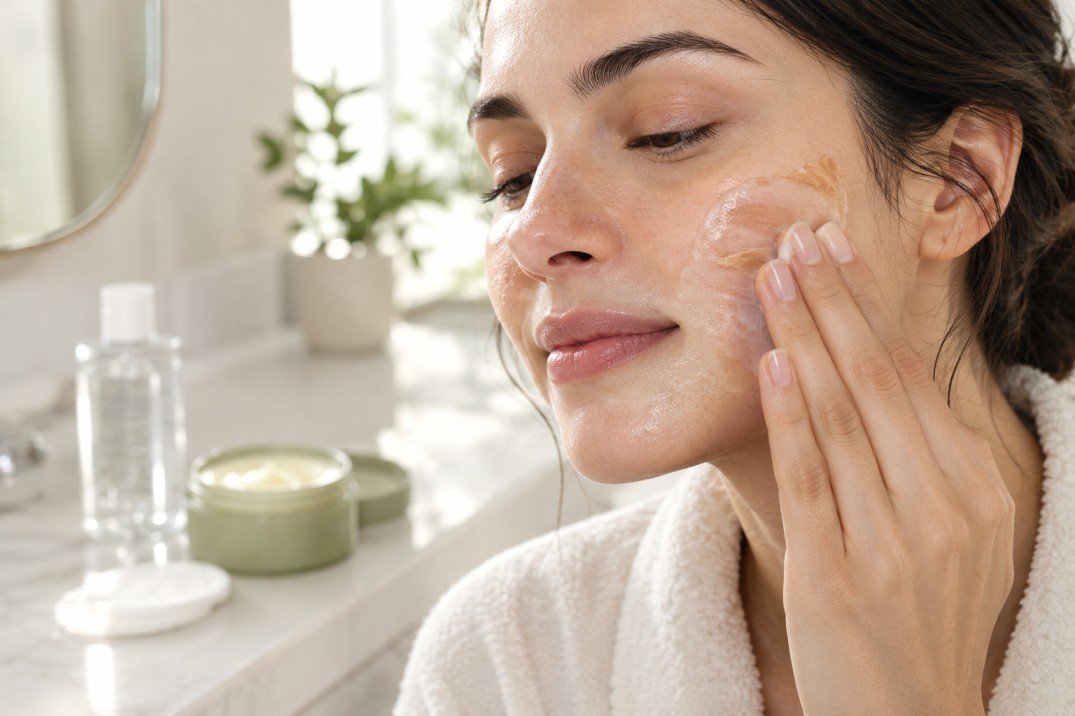
- Remove the makeup. Use a cleansing balm, cleansing oil, or micellar water. Massage it in for 30 to 60 seconds so it can dissolve the product, and pay attention to the eyes, lips, and hairline.
- Cleanse again. Use a gentle water-based cleanser to remove what’s left of the first cleanser and any remaining oil.
- Hydrate. Pat on a hydrating toner or essence if you like. This step is optional.
- Treat. Apply a serum that fits your needs, such as hyaluronic acid for hydration, niacinamide for oil balance and tone, or vitamin C (more often in the morning).
- Moisturize. A moisturizer helps hold in water and supports your skin barrier.
- Eye area and lips (optional). A small amount of eye cream and lip balm helps, since these areas get a lot of product.
In the morning you’ll still need sunscreen. That’s the one step you don’t skip, makeup or not.
Do I really need to double cleanse?
Often, yes. It depends on what you wore.
Double cleansing is worth it if you wore foundation, waterproof mascara, long-wear lipstick, or sunscreen. One cleanser rarely removes all of it.
If you only wore a tinted moisturizer or light mascara, a single good cleanse is usually enough. Your skin will tell you. If it feels squeaky, tight, or stripped, you’re being too aggressive.
Does my skin type change what I should do?
Yes, and it’s the part most blogs skip.
- Oily skin: Use a lightweight gel cleanser and a gel-based moisturizer. Skipping moisturizer can make oiliness worse.
- Dry skin: Choose a cream or milk cleanser and a richer moisturizer. Avoid very hot water.
- Combination skin: You can use different products on different zones, or one balanced formula for the whole face.
- Sensitive skin: Keep it simple. Fragrance-free products and fewer steps usually work better than a long routine.
Not sure where you fall? You can check your skin type with our free skin analysis tool and answer a few quick questions to get a clearer picture before you buy anything new.
Can I use retinol or exfoliating acids after removing makeup?
You can, but only on clean skin, and only if your skin is used to them. Retinol, AHAs, and BHAs are more potent than most people realize. Using them every night, right after scrubbing off makeup, is a fast way to irritate your skin.
A safer approach is to start two or three nights a week, always follow with a moisturizer, and stop if you notice stinging, redness, or peeling. If you have a skin condition or are unsure, talk to a dermatologist.
What if I’m too tired to do a full routine?
Do the minimum, which is three steps:
- Remove your makeup (balm, oil, or micellar water).
- Rinse or wash with a gentle cleanser.
- Moisturize.
That’s under three minutes, and it’s far better than sleeping in makeup. Keep a few cleansing wipes by your bed for the nights you really can’t make it to the sink, then do a proper wash in the morning.
What about skincare before makeup?
Good question, since the order matters. In the morning, a typical sequence is cleanser, hydrating serum, moisturizer, sunscreen, then makeup. Give each layer a minute or two to settle. If foundation pills or looks patchy, you may be using too much product or not waiting long enough.
If your makeup keeps sliding off or looking cakey, your skin type may not match your products. A quick skin type check can point you toward formulas that suit your skin.
What are the most common mistakes after makeup?
- Rubbing hard at waterproof makeup instead of dissolving it first
- Using only a wipe and calling it done
- Washing with very hot water
- Using too many active products at once
- Skipping moisturizer on oily skin
- Never washing makeup brushes (once a week for face brushes is a good rule)
Skincare after makeup
Makeup is something you do for the day. Skincare is something you do for your skin’s future. You don’t have to choose between them, but if you had to, you’d keep the skincare. Remove everything gently, cleanse, hydrate, and match your products to your actual skin type. If you’re still guessing, start with the skin analysis tool and build your routine from there.
Frequently Asked Questions
1. What skincare should I do after wearing makeup all day?
Remove makeup with a balm, oil, or micellar water, cleanse again with a gentle face wash, then apply a serum and moisturizer. Sunscreen comes the next morning.
2. Is it okay to sleep with makeup on once in a while?
One night usually won’t cause lasting harm, but it can lead to clogged pores, irritation, or a breakout, especially on oily or acne-prone skin. Doing it often increases the risk.
3. Can I just use makeup wipes to remove makeup?
Wipes are fine in a pinch, but they rarely remove everything and can irritate if you rub. Follow with a cleanser when you can.
4. How often should I wash my makeup brushes and sponges?
Face brushes and sponges about once a week, eye brushes every one to two weeks. Dirty tools can transfer bacteria and old product back to your skin.
5. Should I moisturize if I have oily skin and wear makeup?
Yes. Oily skin still needs water-based hydration, and a lightweight gel moisturizer won’t feel heavy under makeup.
6. What’s the difference between a makeup remover and a cleanser?
A makeup remover dissolves makeup and sunscreen. A cleanser washes away dirt, sweat, and leftover oil. Using both gives the most thorough clean.
7. How do I know which products suit my skin?
Start by learning your skin type and main concerns. You can use our skin analysis tool as a starting point, and see a dermatologist for persistent or severe skin issues.