If you’ve dealt with acne for more than a week, you’ve probably gotten “advice” from everyone, your aunt, a random TikTok, that one friend who swears toothpaste cures pimples overnight. Some of it helps. A lot of it just makes things worse. And honestly, that’s the frustrating part about acne: everyone has an opinion, but very few people actually explain why your skin is breaking out in the first place.
So let’s slow down and separate what’s actually true from what’s just internet folklore. Because once you understand what’s really causing your breakouts, it becomes so much easier to figure out how to build a skincare routine for your skin type instead of just throwing random products at your face and hoping something sticks.
Myth #1: “Acne only happens because your skin is dirty”
This one refuses to die. The logic seems obvious, right? Pimples = dirt = wash harder. Except that’s not really how it works.
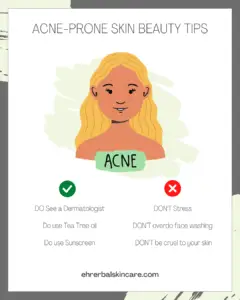
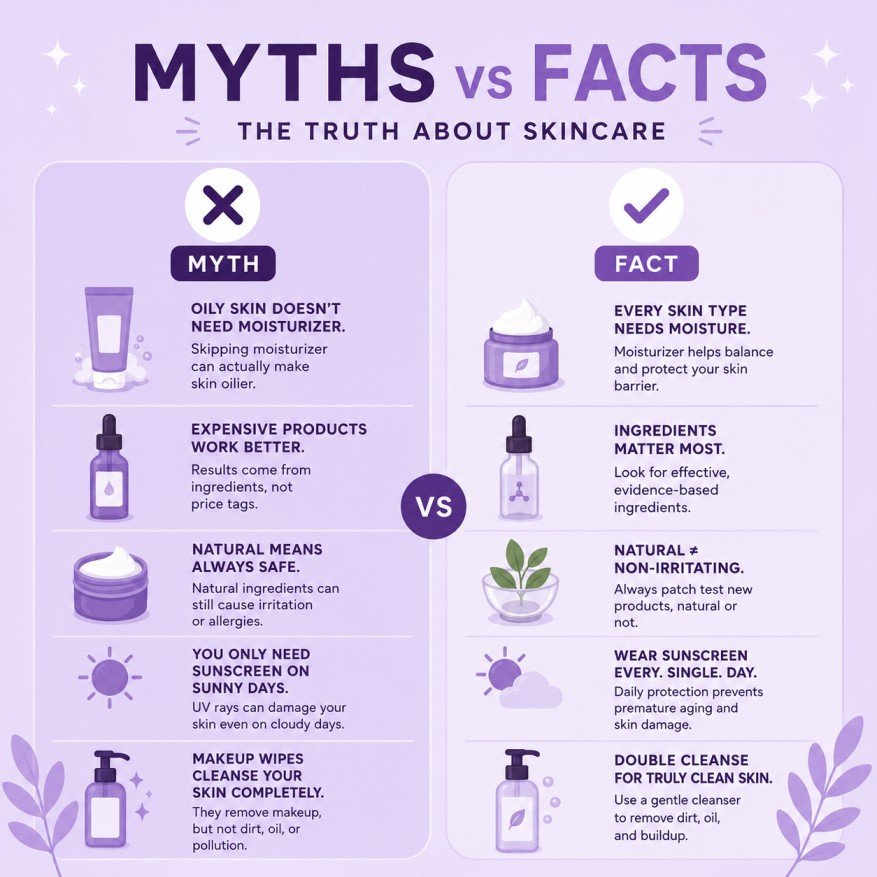
Fact: Acne is mostly driven by excess oil production, clogged pores, hormones, and bacteria not dirt sitting on your face. In fact, over-washing or scrubbing aggressively can strip your skin’s natural barrier, which often triggers more oil production as your skin tries to compensate. So that “deep clean” feeling? It might be quietly making your breakouts worse.
If you’re prone to breakouts, a gentle cleanser used twice a day is usually plenty. Save the double-cleansing and harsh scrubs for special occasions, not daily habit.
Myth #2: “Oily skin means you shouldn’t use moisturizer”
This is one of the most common mistakes people with acne-prone skin make. It feels logical why add more oil to already-oily skin? But skipping moisturizer usually backfires.
Fact: When you skip moisturizer, your skin can become dehydrated, and dehydrated skin often overcompensates by producing even more oil. It’s a frustrating cycle. The real fix isn’t skipping hydration — it’s choosing the right kind. Lightweight, oil-free, non-comedogenic moisturizers hydrate your skin without clogging pores or adding excess shine.
This is exactly why understanding your skin type matters so much before you build a routine. Oily, dry, combination, and sensitive skin all need different approaches — what works for your friend’s dry skin could be a disaster for your oily, acne-prone skin, and vice versa. Even the natural ingredients that help each skin type look different: oily skin tends to respond well to lightweight, oil-balancing ingredients, dry skin usually needs richer, more nourishing ones, and combination skin often does best with a mix of the two depending on the area of the face. If you’re not sure where you land, a quick free skin type quiz online can save you a lot of trial and error.
Myth #3: “Popping a pimple gets rid of it faster”
We’ve all been tempted. It feels productive in the moment. It is almost never worth it.
Fact: Popping a pimple usually pushes bacteria and inflammation deeper into the skin, which can lead to more swelling, redness, and in many cases, permanent scarring or dark spots that take months to fade. What looks like a quick fix often turns a 3-day pimple into a 3-month mark on your skin.
If a spot is really bothering you, a spot treatment with ingredients like salicylic acid or benzoyl peroxide will calm it down far more effectively — and safely — than your fingers ever will.
Myth #4: “Diet has nothing to do with acne”
For a long time, dermatologists pushed back hard on the idea that food affects skin. The pendulum has swung a bit since then.
Fact: While diet isn’t the sole cause of acne, research has increasingly linked high-glycemic foods (think sugary snacks, white bread, soda) and dairy to breakouts in some people. It’s not the same for everyone skin is personal that way but if you notice a pattern between certain foods and flare-ups, it’s worth paying attention to. Just don’t expect cutting out sugar alone to replace an actual skincare routine; it’s a piece of the puzzle, not the whole picture.
Myth #5: “One product will clear your skin completely”
Every few months a new “miracle” serum goes viral promising clear skin in days. And every few months, thousands of people buy it, use it once, and wonder why nothing changed.
Fact: Clear skin isn’t usually about one hero product it’s about consistency and the right combination of steps used in the right order, suited to your specific skin type and concern. A cleanser that’s too harsh, a moisturizer that’s too heavy, or skipping SPF can quietly undo the good work of even the best acne treatment. It also helps to check skincare ingredients for skin type before you buy a product marketed as “for acne” can still contain ingredients that are too drying or too heavy for what your skin actually needs.
This is really the heart of it: acne-prone skin doesn’t respond to guesswork, it responds to routine. And the routine that works for you depends entirely on your skin type, your main concern, and a bit of patience while your skin adjusts.
Free skin type quiz online to check What Actually Works?
If there’s one thing to take from all this, it’s that acne myths usually promise a shortcut, and the facts usually point back to the same boring-but-true answer: know your skin, be consistent, and don’t overcomplicate it.
If you’re not sure where to start, we built a free tool specifically for this. Head over to our Know Your Skin page, where you’ll find three things in one place: a free skin type quiz online to figure out exactly what you’re working with, a way to check skincare ingredients for skin type so you’re not buying based on guesswork, and an AM PM skincare routine builder that lays out a simple morning and night order based on your skin type and main concern. It takes the guesswork out completely, so you’re not stuck piecing together advice from five different corners of the internet.
Because at the end of the day, learning how to build a skincare routine for your skin type isn’t complicated it just takes clearing out the myths first. Once you know what’s actually true, and once you understand the natural ingredients for oily, dry, or combination skin that actually work for you, the rest tends to fall into place.
Ready to figure out your routine? Try the free Skin Quiz, Ingredient Checker, and Routine Builder here and stop guessing what your skin actually needs.