Difference between organic and natural skincare
If you stand before a skincare shelf, you may wonder why one jar says “organic” and the next says “natural”.
These two words are often used interchangeably in marketing.
Yet they indicate very different things when you look past the label.
This guide answers the question directly.
Additionally, it walks through the practical side.
It covers building a chemical-free routine, fading acne scars, and calming hormonal acne.
It also shows how to adjust your routine for oily skin in summer.
Finally, learn how to layer your products in the correct order so they work.
The guide explains the difference between organic and natural skincare.
What is the difference between organic and natural skincare?
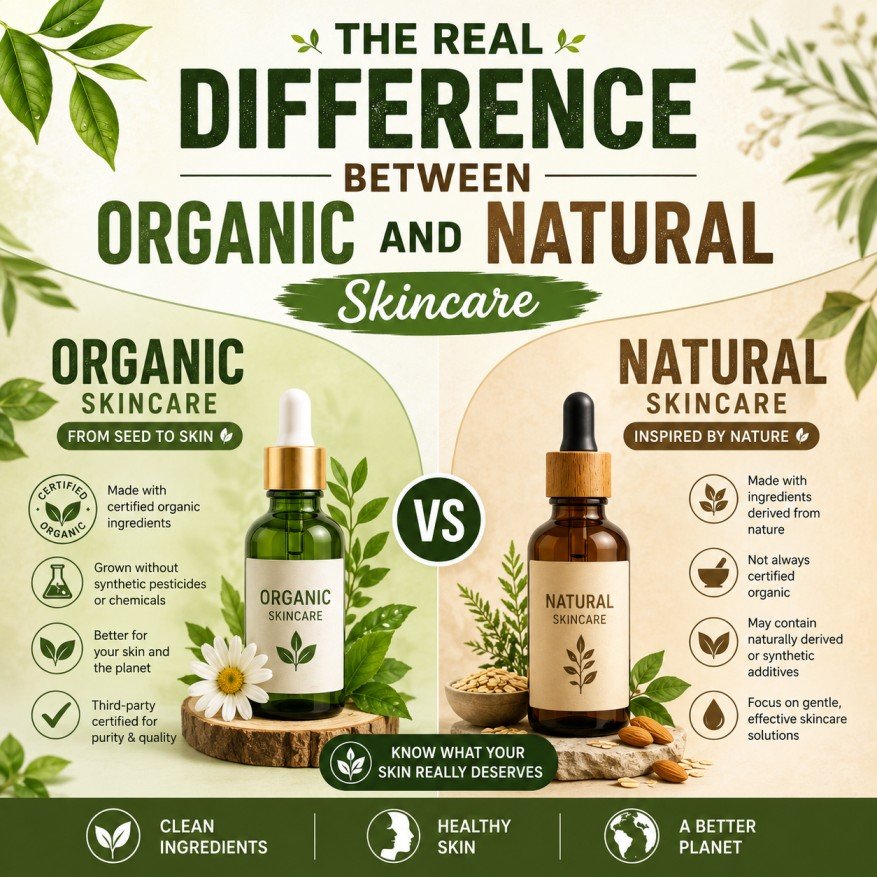
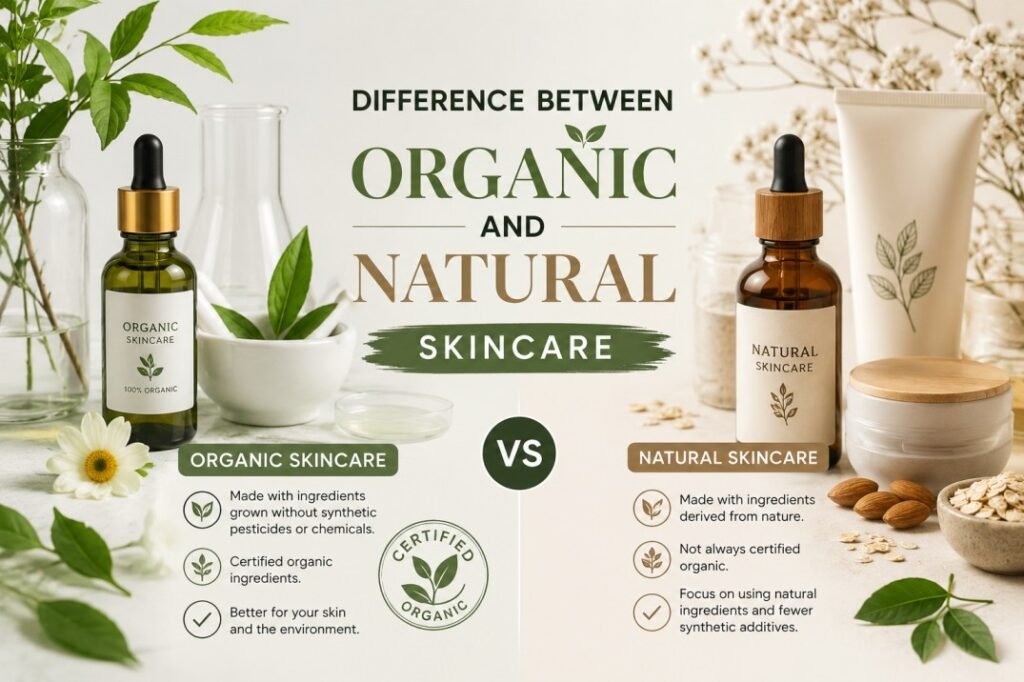
Organic skincare refers to products made with ingredients grown without synthetic pesticides, chemical fertilizers, or genetically modified organisms.
Additionally, organic products are typically verified by a certifying body, such as USDA Organic or COSMOS.
“Organic” is a claim about how the raw ingredients were farmed.
The difference between organic and natural skincare is a matter of farming practices.
Natural skincare refers to products made from ingredients derived from nature.
Examples include plants, minerals, or animal by-products, rather than synthetic chemicals.
In contrast, the difference between organic and natural skincare is that ‘Natural’ refers to origin, not production methods.
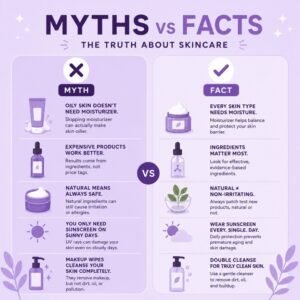
Here’s what many people miss: a product can be natural without being organic.
In some cases, without heavy regulation, a product can be labeled natural or organic without meeting strict standards.
This highlights the difference between organic and natural skincare, and why consumers should check standards beyond labels.
| Organic | Natural | |
|---|---|---|
| Focus | Farming method | Ingredient source |
| Certification | Often third-party certified | Rarely certified |
| Synthetic additives | Restricted or banned | May still contain some |
| Regulation | Stricter | Loosely regulated |
In short: organic is a subset of natural. All organic skincare is natural, but not all natural skincare is organic.
Why does this difference actually matter for your skin?
It matters most if you have sensitive skin, allergies, or are trying to avoid pesticide residue and synthetic preservatives. Organic products give you a verified paper trail. Natural products give you plant-based ingredients, but without certification, you’re trusting the brand’s word on purity and sourcing.
If your priority is avoiding synthetic chemicals altogether, look for both words together — “certified organic and natural” — rather than either one alone.
How to Build a Chemical-Free Skincare Routine for Glowing Skin
A truly chemical-free routine isn’t about buying more products — it’s about simplifying what touches your skin every day. Here’s a routine that works for most skin types.
What does a basic chemical-free routine look like?
- Cleanse — Use a gentle, oil-based or herbal cleanser (like besan, honey, or a mild herbal face wash) instead of sulfate-heavy foaming cleansers.
- Tone — Rose water or witch hazel water balances pH without alcohol.
- Treat — Apply a targeted natural serum (vitamin C from citrus extracts, niacinamide from plant sources, or aloe vera gel).
- Moisturize — Use plant oils like jojoba, squalane (olive-derived), or shea butter suited to your skin type.
- Protect — Mineral sunscreen (zinc oxide or titanium dioxide) instead of chemical UV filters.
What ingredients should you avoid for a truly chemical-free routine?
Watch for parabens, sulfates (SLS/SLES), synthetic fragrance, phthalates, and mineral oil. These are the most common irritants hiding in “clean-sounding” products that aren’t actually clean.
How long before you see glowing skin results?
Most people notice a visible change in texture and tone within 4 to 6 weeks of consistent use, since skin cell turnover takes roughly 28 days. Glow isn’t instant — it’s cumulative.
How to Remove Acne Scars Naturally at Home
What actually fades acne scars naturally?
Natural remedies work best on post-inflammatory hyperpigmentation (the dark or red marks left after a pimple heals) rather than deep, pitted scars, which usually need professional treatment. For surface marks, consistency matters more than any single ingredient.
What are the most effective home remedies for acne scars?
- Aloe vera gel — soothes inflammation and supports skin repair; apply fresh gel nightly.
- Lemon juice (diluted) — mild natural exfoliant due to citric acid; use sparingly and always with sunscreen, since it increases sun sensitivity.
- Raw honey — antibacterial and helps retain moisture during healing.
- Turmeric and gram flour (besan) mask — traditional remedy that supports even skin tone.
- Rosehip seed oil — rich in vitamin A and essential fatty acids, commonly used for scar and texture improvement.
How often should you apply these remedies?
3 to 5 times a week is typically enough. Daily use of exfoliating ingredients like lemon juice can actually irritate skin and worsen dark marks, so moderation matters more than frequency.
When should you see a dermatologist instead?
If scars are pitted, raised, or haven’t improved after 8–12 weeks of consistent home care, it’s time to consult a professional for options like micro-needling or chemical peels.
Best Natural Remedies for Hormonal Acne
What is hormonal acne, and how is it different?
Hormonal acne typically shows up along the jawline, chin, and lower cheeks, tends to flare around the menstrual cycle, and often presents as deep, tender, cystic bumps rather than surface blackheads.
What natural remedies help with hormonal acne?
- Spearmint tea — traditionally used to help balance androgen levels when consumed regularly (1–2 cups daily).
- Zinc-rich foods — pumpkin seeds, lentils, and chickpeas support skin healing and may reduce breakout severity.
- Tea tree oil (diluted) — applied topically as a spot treatment for its antibacterial properties.
- Green tea extract — both consumed and applied topically, it has anti-inflammatory compounds that may reduce sebum production.
- Reducing dairy and high-sugar foods — not a “remedy” applied to skin, but one of the most consistently reported dietary triggers for hormonal breakouts.
Do natural remedies fully replace medical treatment for hormonal acne?
Not always. Natural remedies can meaningfully reduce mild-to-moderate hormonal acne, but persistent cystic acne often needs a dermatologist’s input, especially if it’s tied to an underlying hormonal condition.
Natural Skincare Tips for Oily Skin in Summer
Why does oily skin get worse in summer?
Higher temperatures and humidity increase sebum (oil) production and sweat, which combine with dirt and bacteria to clog pores faster than in cooler months.
What’s the best natural summer routine for oily skin?
- Cleanse twice daily with a gentle gel or foaming herbal cleanser — over-washing strips skin and triggers more oil production as compensation.
- Use a clay mask (multani mitti / bentonite clay) 1–2 times a week to absorb excess oil.
- Swap heavy creams for lightweight gels — aloe vera gel or a hyaluronic acid serum hydrates without clogging pores.
- Blot, don’t strip — carry blotting paper instead of washing your face repeatedly through the day.
- Always use mineral sunscreen — oily skin still needs SPF, and mattifying mineral formulas won’t add extra shine.
Does drinking more water actually help oily skin?
Indirectly, yes. Dehydration can cause skin to overproduce oil to compensate, so consistent hydration helps regulate oil production, though it isn’t a standalone fix.
Should oily skin skip moisturizer in summer?
No — skipping moisturizer is one of the most common mistakes. It causes the skin to produce even more oil to compensate for the lost hydration. The fix is a lighter, oil-free, gel-based moisturizer, not skipping it entirely.
How to Layer Skincare Products in the Right Order
What is the correct order for applying skincare products?
The general rule: thinnest to thickest texture, so each product can absorb properly.
Morning routine:
- Cleanser
- Toner
- Vitamin C serum (or other antioxidant serum)
- Eye cream
- Moisturizer
- Sunscreen (always last)
Night routine:
- Makeup remover / oil cleanser (if wearing makeup or sunscreen)
- Water-based cleanser
- Toner
- Treatment serum (retinol, niacinamide, or exfoliating acid — not combined carelessly)
- Eye cream
- Moisturizer or night cream
- Facial oil (if used, as the final sealing step)
Does the order really make a difference?
Yes. Applying a heavy cream before a serum blocks the serum’s active ingredients from penetrating the skin at all. Layering thin-to-thick lets each product do its job instead of sitting on top of the previous one.
Can you use all these products every single day?
Not all of them. Exfoliating treatments (acids, retinol) are best used 2–3 times a week, not daily, to avoid over-exfoliating and damaging the skin barrier. Cleanser, moisturizer, and sunscreen are the only steps needed daily without exception.
Frequently Asked Questions
Is organic skincare always better than natural skincare? Not necessarily — it depends on your priority. Organic guarantees farming standards; natural simply means plant-or-mineral-derived. Both can be effective; organic just comes with more verification.
Can natural remedies alone clear hormonal acne? For mild cases, often yes, with consistency over several weeks. For persistent or cystic hormonal acne, natural remedies work best alongside professional guidance.
What’s the single most important step in any skincare routine? Sunscreen. It protects against the sun damage that undoes progress from every other step, including acne scar fading and glow-focused routines.